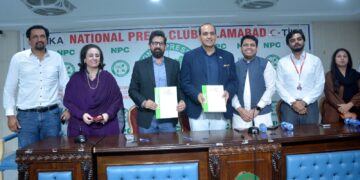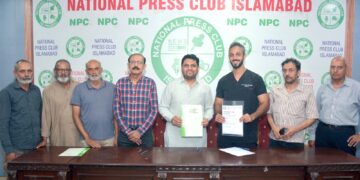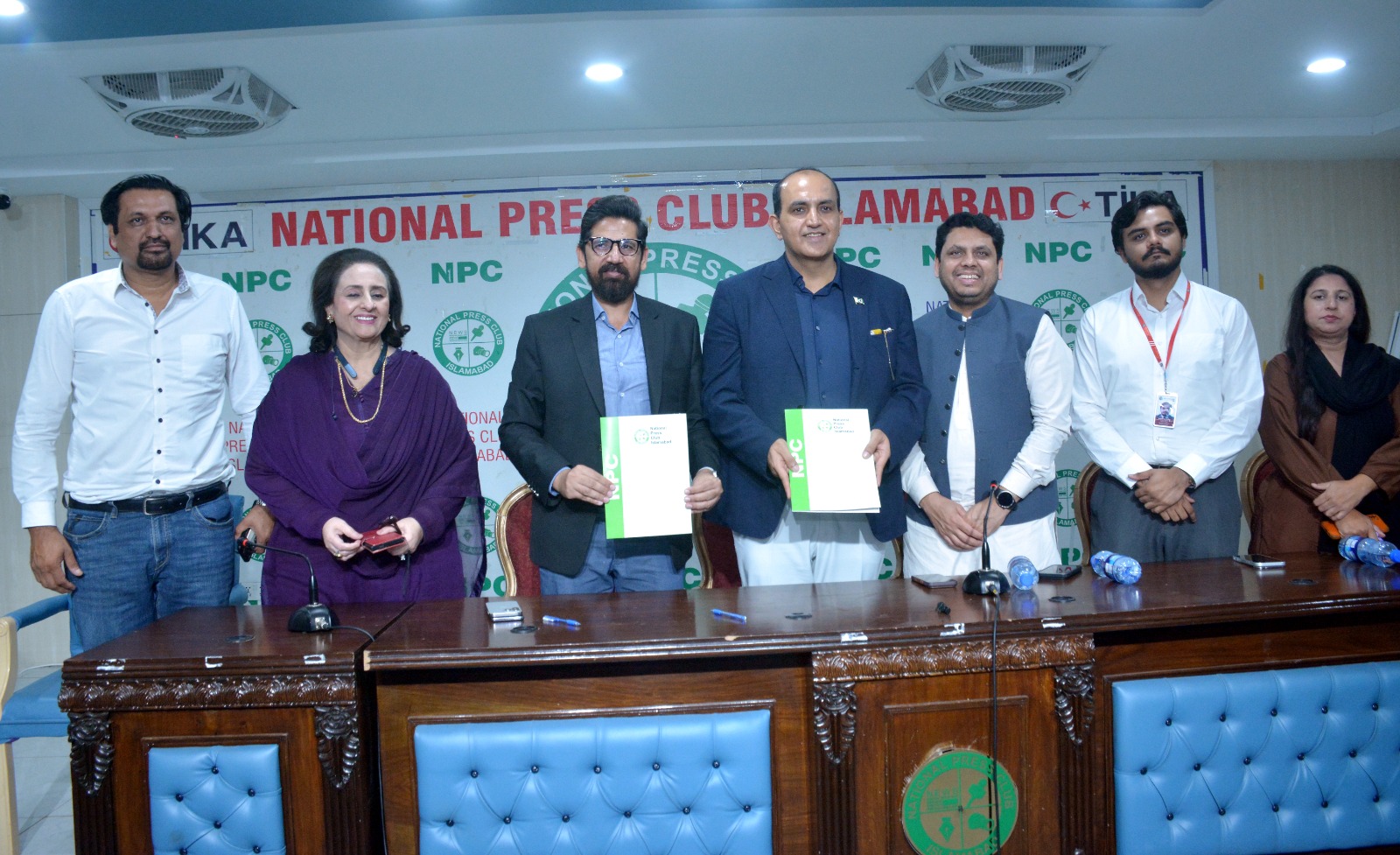
Islamabad (City Reporter): A Memorandum of Understanding (MoU) was signed between the National Press Club (NPC), Islamabad, and Roots Millennium Schools at a ceremony held at the NPC. President National Press Club Abdur Razzaq Sial and Founder and Chief Executive Officer of Roots Millennium Schools Dr Faisal Mushtaq signed the agreement, under which children of NPC members will receive special discounts on educational fees.
According to the agreement, NPC members will be entitled to a 50 percent discount on admission fees, 20 percent on tuition fees, and 50 percent on security fees. The initiative aims to facilitate journalists’ families and make quality education more accessible to their children.
Finance Secretary Abid Abbasi, Joint Secretary Shakeela Jalil, Syed Zaigham Naqvi, Nasir Aslam Raja and other members were also present at the ceremony.
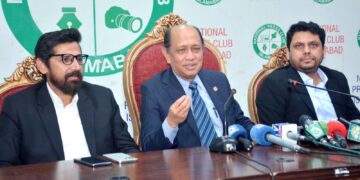
Addressing the gathering, NPC President Abdur Razzaq Sial thanked Dr Faisal Mushtaq for extending this facility to the journalist community. He said the National Press Club was actively pursuing cooperation with various institutions to provide maximum facilities to journalists and their families.
He said the agreement with Roots Millennium Schools was another step towards the welfare of NPC members. Every parent wishes to provide quality education to their children, and the special concession offered by Roots Millennium Schools was a commendable initiative. He added that Roots Millennium Schools was among Pakistan’s leading educational institutions.
NPC Secretary Dr Furqan Rao said that members of the National Press Club were residing in different districts across the country. He stressed that the agreement should be applicable to all campuses of Roots Millennium Schools so that children of all NPC members could benefit from the facility.
Finance Secretary Abid Abbasi thanked the school administration and expressed hope that the agreement would prove beneficial for journalists and their families.
Speaking on the occasion, Roots Millennium Schools Founder and CEO Dr Faisal Mushtaq thanked the leadership and members of the National Press Club. He said facilitating access to quality education was one of the institution’s fundamental priorities. Journalists played a vital role in promoting public awareness, social consciousness and democratic values; therefore, providing educational opportunities to their children was a positive social initiative.
Dr Mushtaq said his mother had embarked on the journey of promoting education nearly 40 years ago. In 1988, an educational institution was established in Rawalpindi with 40 students. Over the years, it expanded into a major educational network operating 75 campuses across the country, offering educational opportunities from early childhood to higher levels of learning.
He said Roots Millennium Schools focused not only on conventional education but also on modern technology, robotics, STEM education, foreign languages, sports, teacher training and international educational opportunities. Students were also guided in pursuing various national and international educational programmes and university admissions.
Emphasising the social responsibility of educational institutions, Dr Mushtaq said education should not be viewed merely as a business but as a means of serving society. He said the institution’s policies included scholarships for deserving and talented students, while its foundation was also working to enhance the capacity of government schools and improve educational standards.
He observed that modern technology and artificial intelligence had opened new avenues in education. However, technology could never fully replace the human connection between teachers, parents and children. Educational institutions needed to adopt modern tools while giving equal importance to children’s mental and emotional development, social upbringing and interpersonal relationships.
Referring to the impact of the COVID-19 pandemic, Dr Mushtaq said the closure of schools, colleges and universities across the world had posed unprecedented challenges to education systems. During the pandemic, the education of approximately 1.6 billion children worldwide was affected, leading to a significant expansion of online learning.
He said the growing use of ChatGPT, large language models and other digital platforms had brought considerable changes to traditional teaching methods. However, the experience also demonstrated that online education alone could not fulfil all the educational, social and emotional needs of children.
Dr Mushtaq stressed that the effects of excessive screen time and the unnecessary use of mobile phones and the internet could not be ignored. Parents, he said, needed to monitor not only their children’s access to digital devices but also their activities, mental well-being and emotional development.
He further informed the gathering that students in Grades Six, Seven and Eight at Roots Millennium Schools had been provided with access to laptops to help them benefit from modern educational resources. He said technology should be used as an effective tool for learning, while maintaining the essential roles of teachers, family guidance and social development.
Dr Mushtaq added that cooperation would also be extended to provide discounted facilities to NPC members at other relevant educational brands associated with the institution. However, the details of concessions could vary according to the respective campuses and programmes.
At the conclusion of the ceremony, the National Press Club leadership thanked Dr Faisal Mushtaq and the management of Roots Millennium Schools for the initiative, expressing hope that the partnership would contribute significantly to the welfare of the journalist community and the brighter future of their children.