Announcement of a Unique National Symbol (Logo) for the Pakistani Rupee
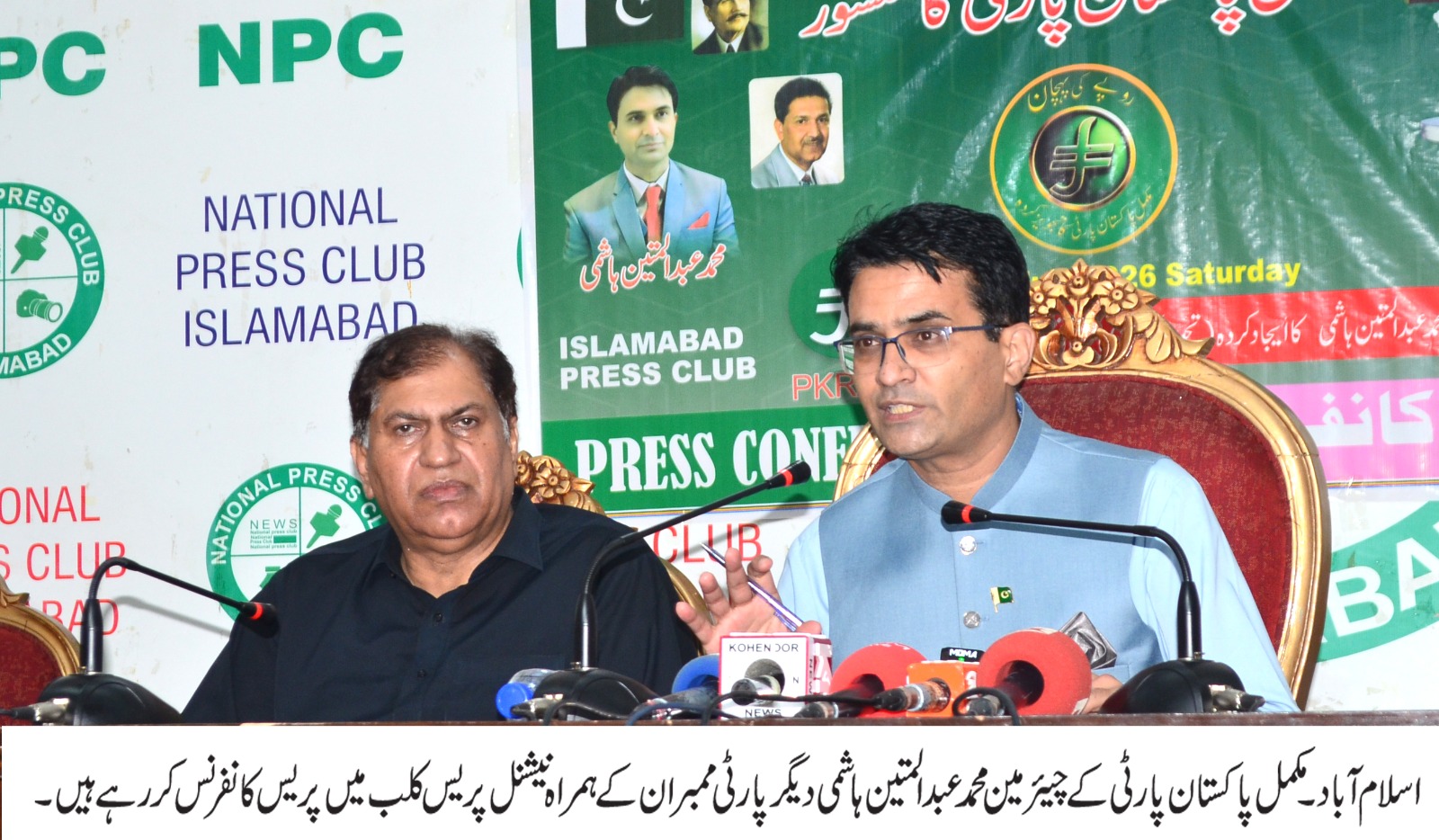
Islamabad (Staff Reporter): Chairman of the Mukammal Pakistan Party, Muhammad Abdul Mateen Hashmi, has announced the introduction of a unique national symbol (logo) for the Pakistani rupee. He urged the government to officially adopt the symbol and implement it across all national and international financial institutions.
He stated that the symbol should not belong to any individual or political party but should instead be recognized as a shared national asset of the State of Pakistan and its people.
Hashmi also called for Urdu to be made the practical language of government offices, education, and administration, and stressed the need for the full implementation of the Supreme Court’s ruling regarding the use of Urdu.
He said that Pakistan possesses abundant natural resources, but due to ineffective policies, heavy taxation, high electricity costs, and an inefficient system, the country’s industries are unable to compete internationally. He added that providing support to local industries would create more employment opportunities.
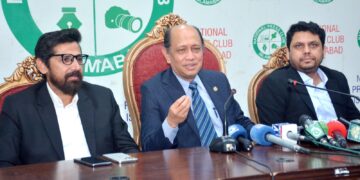
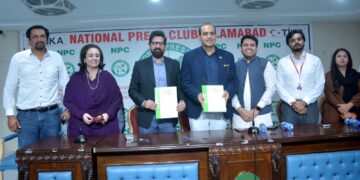
Speaking at a press conference at the National Press Club Islamabad, Hashmi said that developed countries have distinct symbols for their currencies, whereas Pakistan, despite 78 years of independence, has yet to introduce an official symbol for its currency.
He explained that the proposed symbol for the Pakistani rupee is based on the Urdu letter “ر” (R), representing the national language and Pakistan’s identity, while the two parallel lines above it symbolize economic stability.
Hashmi emphasized that the symbol should not be owned by any individual or political party but should serve as a common national asset of the State of Pakistan and its citizens. For this reason, instead of registering it in his own name, he has presented it to the government as a national gift.
He further stated that Pakistan needs to strengthen its national identity in every sector. According to him, Urdu should be adopted as the practical language of official business, education, and administration, and the Supreme Court’s decision on the matter should be fully implemented.
He argued that the dominance of English has created a sense of inferiority among many citizens and that millions of students are unable to complete their education because of language barriers.
Discussing the manifesto of the Mukammal Pakistan Party, Hashmi said that his party believes in the continuity of the local government system, the promotion of environmentally friendly industries, the economic and social empowerment of women, transparent governance, the protection of local industries, self-reliance in modern technology, and the strengthening of the national economy.
He reiterated that Pakistan is rich in natural resources, but poor policymaking, excessive taxes, expensive electricity, and an inefficient system have prevented domestic industries from competing in global markets. He said that supporting local industries would generate more employment opportunities.
Addressing the country’s law and order situation, Hashmi said that dialogue and national consensus are the key to resolving all issues. However, where it is necessary to uphold the authority of the state, action should be taken strictly in accordance with the law.
Responding to a question, he said that if his party comes to power, it will place the public interest above all else and will address inflation, petroleum prices, and other economic challenges through better planning and effective policies.
He also emphasized the timely conduct of local government elections, stating that a strong local government system is the true guarantee of democracy and political representation for ordinary citizens. He noted that, compared with contesting seats in the National Assembly, participating in politics at the local government level is more accessible for the middle class.
Hashmi concluded by saying that the Mukammal Pakistan Party will continue its political struggle to promote Pakistan’s national identity, build a stronger economy, advance the use of Urdu while respecting regional languages, improve education, empower women, and achieve the vision of a self-reliant Pakistan.